
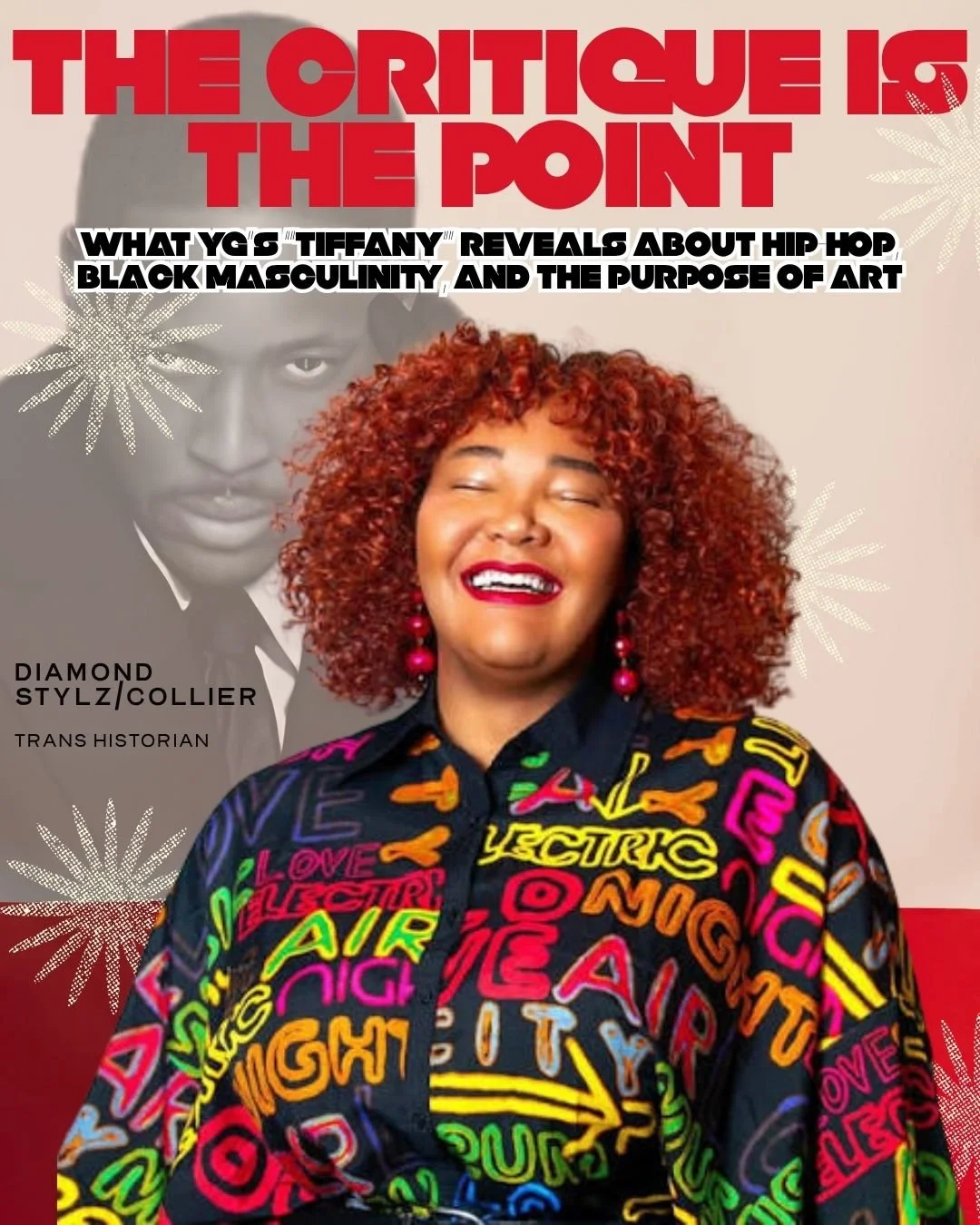
THE CRITIQUE IS THE POINT: What YG’s “Tiffany” Reveals About Hip-Hop Black Masculinity and the Purpose of Art
What happens when hip-hop tells Trans stories? When Kendrick Lamar released "Auntie Diaries," the public conversation quickly expanded beyond the music itself. Listeners debated his use of slurs like faggot, his decision to deadname his family members. We ask whether Kendrick’s personal journey to acceptance justified the harm some Transgender listeners felt the song reproduced in its high-stakes time. I was not one of those Trans people. I thought the song was a beautiful, honest reflection of Kendrick’s journey to understanding the Trans experience. I made a full YouTube review breaking it down. In my lifetime, mentions of Transgender people in mainstream hip-hop have been relatively rare. When they did appear, they often went back to those age-old Transphobic tropes, shock value, and anxieties surrounding gender identity. Against that backdrop, hearing Kendrick Lamar thoughtfully examine his relationship to Transgender people on "Auntie Diaries" felt genuinely refreshing. Rather than positioning himself as someone with all the answers, he made himself part of the story, exposing his own ignorance, inherited prejudices, and capacity for growth. We don’t have to agree with all the artistic choices he made, but I respected his willingness to place himself under scrutiny instead of simply scrutinizing Transgender people. That was something I believed deserved serious consideration—not blind praise or immediate dismissal, but deep thought and rigorous critique. That's exactly what I want us all to do.